Lego’s Nintendo Game Boy: A Nostalgic Twist with a Tech Surprise
In an unexpected yet delightful fusion of retro gaming and modern design, Lego has officially revealed its latest collaboration: a brick-built Nintendo Game Boy. This nostalgic set isn’t just a nod to classic handheld gaming—it comes with a unique twist: a lenticular display that mimics animated gameplay. The result? A collectable that’s more than just display-worthy—it’s an interactive homage to gaming history.
A Detailed Look at the Lego Game Boy
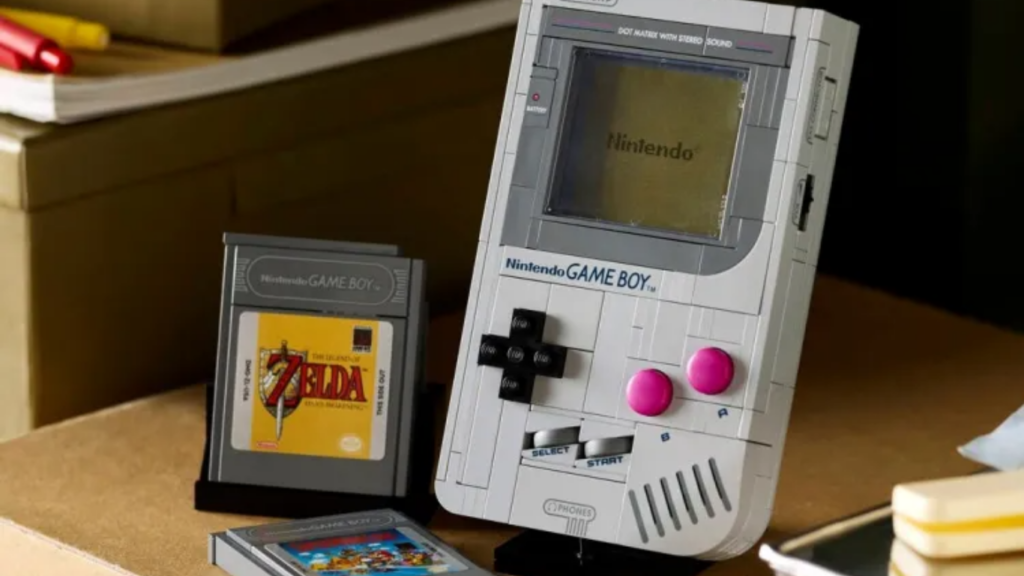
At first glance, the Lego Nintendo Game Boy looks almost indistinguishable from the original 1989 handheld. The build captures key elements like the iconic D-pad, the A and B buttons, the volume slider, and even the cartridge slot at the back. True to form, it uses gray tones and proportions that reflect the handheld’s compact design.
What sets this Lego set apart, however, is the lenticular screen. Using clever brick layering, the display shifts between scenes from Super Mario Land as you tilt the device. This adds an element of interactivity that mirrors the original gaming experience—without the need for actual electronics.
It’s now available for preorder and is scheduled to ship on October 1st. Measuring approximately 3.5 inches (14 cm) in width and 5.5 inches (9 cm) in height, the build closely mirrors the dimensions of the original Game Boy.
More Than a Toy: Engineering Meets Art
This isn’t Lego’s first foray into gaming culture. Previous kits such as the NES console and interactive Mario sets have proven that the company can blend playfulness with precision. However, this particular build demonstrates how Lego is leaning deeper into mechanical illusion and design sophistication.
The lenticular display is a prime example of this evolution. While it may look simple on the surface, creating a seamless motion illusion with Lego bricks requires advanced engineering. This appeals to both casual builders and technical enthusiasts who enjoy discovering how things work.
Gamers and Collectors Rejoice
Gamers who grew up with the Game Boy will find this Lego version an irresistible collector’s piece. It isn’t just about the nostalgia—it’s also about the craftsmanship. For retro gaming fans, it brings the best of both worlds: a classic console reimagined through the lens of a modern, modular building system.
What’s more, the fans—whether or not they’re hardcore gamers—are drawn to sets that challenge their skills and creativity. The Game Boy’s form factor and interactive screen make this an excellent desk display or centerpiece for any Lego or Nintendo fan’s collection.
Why This Matters for Tech and Toy Innovation
The collaboration speaks to a broader trend in tech: the merging of physical and digital nostalgia. As augmented reality, 3D modeling, and interactive toys continue to evolve, companies like Lego are bridging generations through tangible, buildable artifacts.
For hardware manufacturers, this is a reminder that form and emotion are just as important as function. There’s something inherently valuable in creating tech-inspired designs that don’t rely on screens or batteries, but still evoke powerful memories.
For developers, particularly those working on gamification and user experience, it highlights how physical interactions—such as flipping, tilting, and viewing from different angles—can engage users in meaningful ways.
Final Thoughts: Lego as a Platform for Nostalgia and Design
The Lego Nintendo Game Boy isn’t just a tribute—it’s a technical marvel wrapped in a nostalgic package. By incorporating mechanical motion and staying true to its source material, this proves once again that it’s more than just a toy brand. It’s a storytelling platform, an engineering toolkit, and a cultural bridge.
With its creative blending of retro charm and brick-built precision, the Lego Game Boy is likely to become a favorite among both new builders and veteran fans.
Stay Ahead in Tech
Watch for more creative crossover builds and design insights at KodeCraze.